 Correo electrónico: sales@jmchemi.com lisa@dyjmhg.com
 Whatsapp: +8618953065520
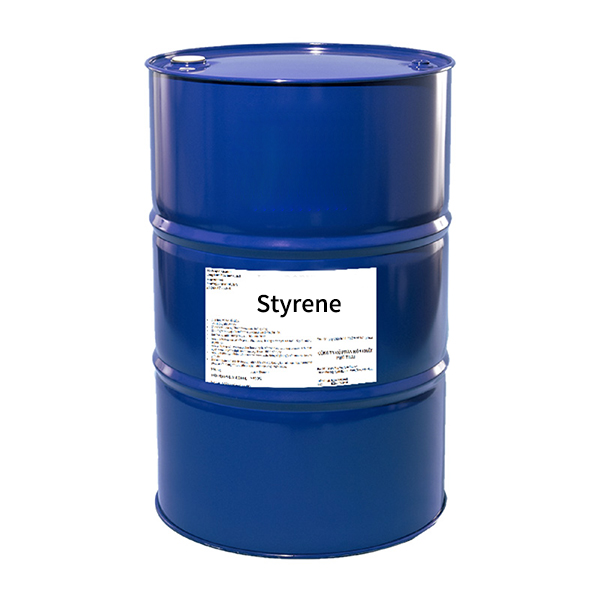
También conocido como vinilbenceno, es un monómero fundamental en la industria petroquímica, que se utiliza principalmente para la producción de poliestireno y otras resinas copolímeras. Clasificado como líquido inflamable de clase 3 (número ONU 2055), el estireno también figura en la lista de sustancias peligrosas debido a su inflamabilidad, reactividad y propiedades toxicológicas.
Información básica
| Artículo | Detalles |
| Fórmula química | (C8H8) |
| Peso molecular | 104,15 g/mol |
| Apariencia | Líquido incoloro y transparente; olor aromático intenso |
| Propiedades físicas clave | Punto de fusión: -30,6 °C; punto de ebullición: 145,2 °C; densidad: 0,91 g/cm³ (20 °C); volátil; ligeramente soluble en agua; miscible con etanol, éter, acetona y la mayoría de los disolventes orgánicos |
| Grados de pureza | Grado industrial (≥99,51 TP3T); grado de polimerización (≥99,81 TP3T, bajo contenido en inhibidores); grado de reactivo (≥99,91 TP3T) |
| Método de producción | Predomina el proceso de deshidrogenación del etilbenceno: el etilbenceno se calienta con vapor en presencia de un catalizador (por ejemplo, óxido de hierro) para producir estireno e hidrógeno. En la producción a pequeña escala también se recogen residuos de caucho de estireno-butadieno (SBR) para su reciclaje. |
Propiedades químicas fundamentales
Alta actividad de polimerización: El estireno tiene un grupo vinilo reactivo (CH=CH2) que se somete fácilmente a la polimerización por radicales libres; incluso a temperatura ambiente, puede polimerizarse lentamente para formar poliestireno (PS), por lo que el estireno de grado industrial suele estabilizarse con inhibidores (por ejemplo, terc-butilcatecol).
Inflamabilidad: Altamente inflamable, con un punto de inflamación de 31 °C y un límite de explosividad de 1,1%–6,1% (v/v) en el aire. Los vapores pueden formar mezclas explosivas con el aire e inflamarse al exponerse a llamas abiertas, calor o chispas.
Capacidad de copolimerización: Reacciona con otros monómeros (por ejemplo, butadieno, acrilonitrilo, anhídrido maleico) para formar copolímeros con propiedades específicas, como el caucho de estireno-butadieno (SBR), el plástico de acrilonitrilo-butadieno-estireno (ABS) y las resinas de estireno-acrílico.
Toxicidad: La inhalación de vapores de estireno o el contacto con la piel pueden provocar irritación de las vías respiratorias, los ojos y la piel. La exposición aguda puede provocar dolor de cabeza, mareos y náuseas; la exposición prolongada puede afectar al sistema nervioso central y a la función hepática. Está clasificado como posible carcinógeno humano (Grupo 2B, IARC).
Principales aplicaciones
Producción de plásticos: Su principal aplicación es la polimerización para formar poliestireno (PS), incluido el poliestireno de uso general (GPS), utilizado en envases y cubiertos desechables, y el poliestireno de alto impacto (HIPS), empleado en electrodomésticos y carcasas de juguetes.
Resinas de copolímeros: Una materia prima fundamental para el plástico ABS (utilizado en piezas de automoción, carcasas de aparatos electrónicos y tuberías), la resina SAN (estireno-acrilonitrilo, para envases alimentarios y dispositivos médicos) y las emulsiones de estireno-acrílico (para pinturas y adhesivos al agua).
Sector del caucho: Se copolimeriza con butadieno para producir caucho de estireno-butadieno (SBR), el caucho sintético más utilizado para neumáticos, cintas transportadoras y juntas.
Otros usos: Se utiliza en la fabricación de resinas de poliéster insaturadas (para plásticos reforzados con fibra de vidrio), resinas de intercambio iónico (para el tratamiento del agua) y recubrimientos especiales.