 Correio eletrónico: sales@jmchemi.com lisa@jmchemi.com
 Whatsapp: +8618953065520
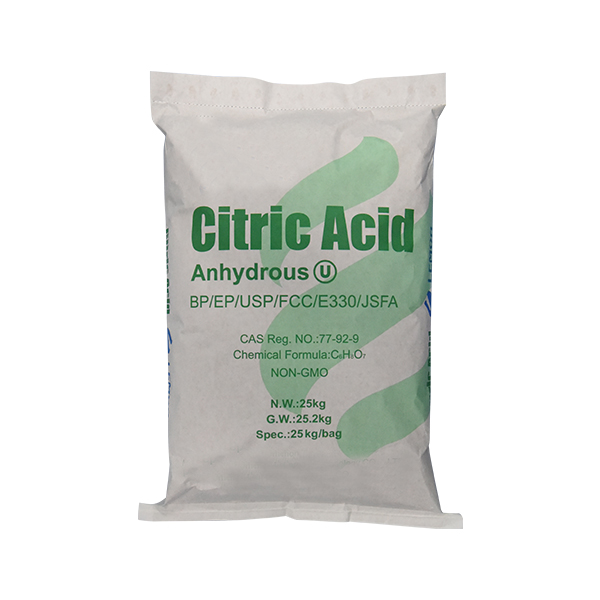
It appears as colorless, odorless, crystalline powder or granules with a sharp, refreshing sour taste. Unlike its monohydrate counterpart, it contains no water of crystallization and is produced by dehydrating citric acid monohydrate under controlled heating conditions. Recognized as a Generally Recognized as Safe (GRAS) substance by the US FDA, it is widely used in food, beverage, pharmaceutical, and industrial applications where low moisture content is critical.
Principais aplicações
Food & Beverage Industry: Primarily used as an acidity regulator (E330), flavor enhancer, and preservative in products requiring low moisture content, such as powdered drinks, instant food mixes, dried fruits, and confectionery (e.g., hard candies, chewing gum). It prevents caking and extends shelf life by absorbing residual moisture.
Pharmaceutical Industry: Serves as a pH adjuster and excipient in solid dosage forms (tablets, capsules) and dry powder formulations. It improves the stability of active pharmaceutical ingredients (APIs) and acts as a chelating agent to bind metal ions that may degrade drugs.
Cosmetics & Personal Care: Added to powder-based skincare products, hair care powders, and dry shampoo to control pH, enhance texture, and prevent clumping. It also functions as a preservative booster in low-moisture cosmetics.
Industrial Applications: Used as a chelating agent in water treatment to remove calcium and magnesium ions (preventing scale formation in boilers and pipelines). It is also applied in metal cleaning (to dissolve rust and oxides) and as a building block for biodegradable polymers and detergents.