 Email: sales@jmchemi.com lisa@jmchemi.com
 Whatsapp: +8618953065520
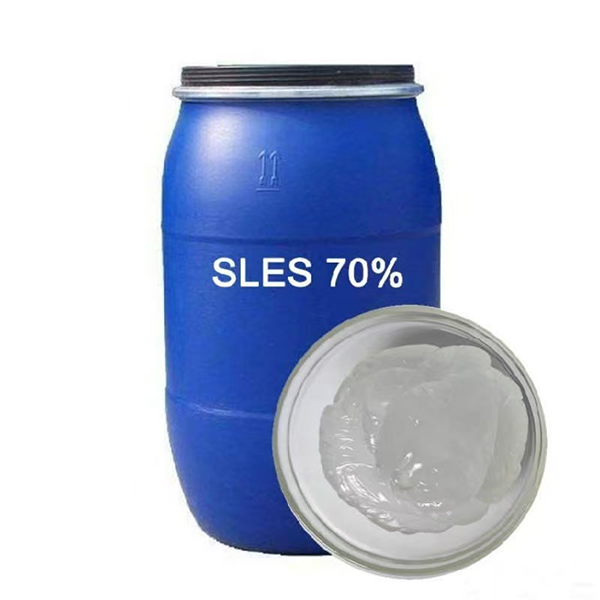
Technical Introduction
Sodium Lauryl Ether Sulphate (SLES), also known as Sodium Laureth Sulfate, is a high-performance anionic surfactant derived from ethoxylated lauryl alcohol. Distinguished by its milder properties compared to Sodium Lauryl Sulphate (SLS), SLES offers excellent foaming, emulsifying, wetting, and detergency capabilities. It is a staple ingredient in personal care products, household cleaners, and industrial formulations, valued for its compatibility with a wide range of additives and reduced skin irritation potential.
Chemical Identity
| Item | Technical Specification |
| Chemical Name | Sodium Lauryl Ether Sulphate; Sodium Laureth Sulfate |
| Abbreviation | SLES; SLES-n (where n = average number of ethylene oxide units, typically 1–3 for industrial grades) |
| General Molecular Formula | C12H25(OCH2CH2)nOSO3Na |
| Molecular Weight | 332.42–420.56 g/mol (varies with n; SLES-2 ≈ 376.49 g/mol) |
| CAS Registry Number | 68585-34-2 (generic for ethoxylated grades; SLES-1: 3088-31-1) |
| UN Number | 3082 (Class 9: Miscellaneous Dangerous Goods; Environmental Hazard) |
| Structural Feature | Composed of a hydrophobic 12-carbon lauryl chain, a hydrophilic polyoxyethylene ether segment (-(OCH2CH2)n-), and a sulfate sodium salt group (-OSO3Na). The ethylene oxide units reduce surface tension and lower skin irritation, differentiating SLES from SLS |
Core Industrial Applications
SLES’s mildness and versatile performance make it a preferred surfactant across multiple sectors:
Personal Care & Cosmetics (Largest Application)
Key ingredient in shampoos, body washes, facial cleansers, bubble baths, and toothpastes. Its low irritation profile makes it suitable for sensitive skin formulations. It acts as a primary foaming agent and cleanser, effectively removing dirt and oil without disrupting the skin’s natural lipid barrier. Complies with EU Cosmetic Regulation (EC 1223/2009) and US FDA standards.
Household Detergents
Used in liquid laundry detergents, dishwashing liquids, and surface cleaners. Enhances cleaning efficiency by emulsifying grease and suspending particulate dirt, and performs well in hard water. Often blended with nonionic surfactants (e.g., alkyl polyglucosides) to improve biodegradability.
Industrial Cleaning Agents
Formulated into heavy-duty degreasers, metal cleaning fluids, and textile scouring agents. Effective for removing oil, wax, and contaminants from machinery, metal surfaces, and textile fibers. Its compatibility with alkaline builders makes it ideal for industrial cleaning formulations.
Other Uses
Emulsifier in pesticide formulations (improves spray adhesion on crop surfaces); solubilizer in pharmaceutical topical creams; wetting agent in emulsion polymerization for paints and adhesives.
Transport: Comply with UN 3082 transport regulations for Class 9 miscellaneous dangerous goods. Use leak-proof containers and label packages with “ENVIRONMENTALLY HAZARDOUS SUBSTANCE” warnings. Avoid transport in extreme temperatures or humid conditions.