 Correo electrónico: sales@jmchemi.com lisa@jmchemi.com
 Whatsapp: +8618953065520
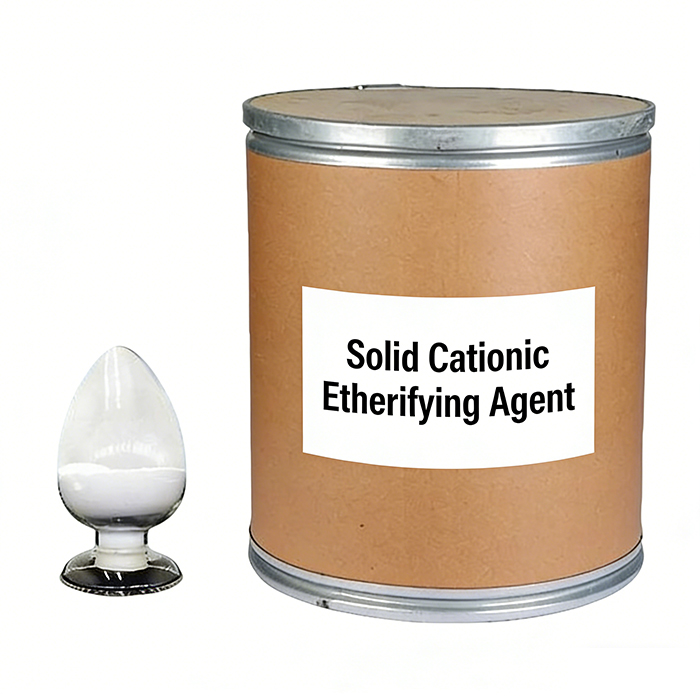
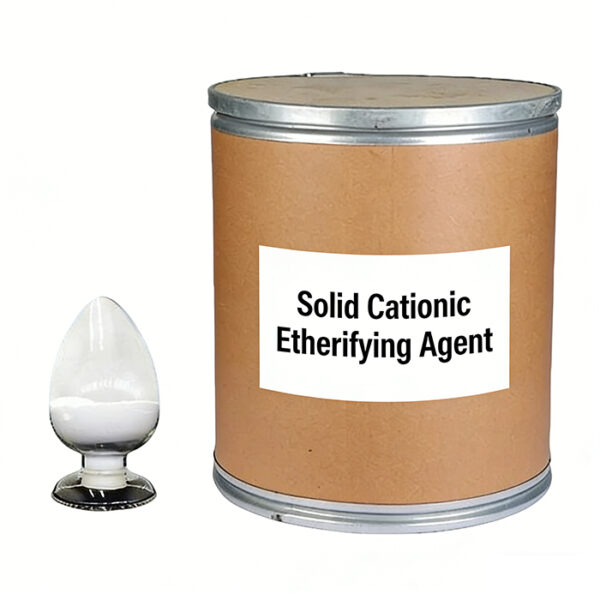
It is widely used in papermaking, daily chemicals, water treatment, textile printing and dyeing and other industrial fields, and is the preferred alternative to liquid cationic etherifying agents in dry/semi-dry modification processes.
Core Basic Information
| Item | Details |
| Chemical Name | 2,3-Epoxypropyl Trimethyl Ammonium Chloride |
| Abbreviation | EPTAC/ETA |
| CAS Registration No. | 3033-77-0 |
| Molecular Formula | C₆H₁₄ClNO |
| Peso molecular | 151.63 |
| Appearance | White powder/crystal at room temperature, hygroscopic and easy to agglomerate |
| Melting Point | Approx. 140℃ |
| Solubility | Easily soluble in water, insoluble in non-polar solvents; absorbs water and dissolves when exposed to air |
| Molecular Characteristic | Contains reactive epoxy group and positively charged quaternary ammonium group, with high etherification reaction activity |
Industrial Application Fields
1.Papermaking Industry
It is used to modify starch, cellulose and other natural polymers as wet-end additives and surface sizing agents. It can improve the retention rate of fillers and fine fibers, enhance the dry strength and water resistance of paper, and optimize the printability of paper products, which is widely used in the production of cultural paper, packaging paper and coated paper.
2. Daily Chemical Industry
Modified guar gum and hydroxyethyl cellulose are prepared for shampoo, hair conditioner and other hair care products, which can strongly adsorb on the negatively charged hair surface, form a protective film, and improve the smoothness, combability and antistatic effect of hair; it can also be used to synthesize cationic surfactants for fabric softeners and daily bactericides.
3.Water Treatment Industry
It is used to modify polyacrylamide (PAM), starch and other polymers to prepare high-efficiency cationic flocculants, which have excellent adsorption and bridging effects on negatively charged colloidal particles in water. It is widely used in sludge dewatering, urban sewage treatment, industrial wastewater turbidity removal and drinking water purification.
4.Petroleum & Textile Industry
Petroleum Industry: Modified polymers are used as fluid loss reducers and oil displacement agents for drilling fluids, which can improve the stability of drilling fluid system and enhance oil recovery efficiency.
Textile Printing and Dyeing: Cationic modification of fibers and sizing agents can improve the dyeing uniformity and color fastness of fabrics, adapt to the salt-free dyeing process, and reduce the environmental pollution caused by printing and dyeing wastewater.
Valoraciones
No hay valoraciones aún.